Guide Under-makeup wear Luxury
Eye serum vs eye cream 7 Decisive Truths
I study skincare the way I study any complex system. I look for causes, constraints, and repeatable results. The under-eye area is small. Yet it behaves like a spotlight.
So, when people ask me to choose between a serum and a cream, I do not treat it like a rivalry. I treat it like a matching problem. Texture matters. Timing matters. Consistency matters most.
This guide stays practical. It focuses on visible outcomes and daily comfort. It also avoids medical promises. If you want one sentence now, it is this. Use serum for layering and speed. Use cream for comfort and barrier support.
Disclosure
This page contains affiliate links. If you buy through them, Luxe Eye Lab may earn a commission at no extra cost to you. I do not accept paid placements in product picks.
Safety note
This is informational content, not medical advice. If you have persistent swelling, rash, burning, or eye discomfort, stop use and seek professional care. The eye area is reactive. Gentle choices protect consistency.
Quick decision guide
If you want a fast answer, I use three questions. They reduce trial and error. They also reduce expensive regret.
1) Do your under-eyes feel dry by midday?
If yes, start with a cream at night. Dryness changes how light reflects. It can make lines look sharper. A richer texture often softens that look.
If no, a serum can be enough for many routines. That is especially true in the morning. Lightweight products tend to sit better under concealer.
2) Do you wear concealer most days?
If yes, prioritize a quick-drying base. I usually start with a serum or gel texture. Then I add a tiny amount of cream only where creasing happens. This approach reduces pilling. It also reduces sliding.
If no, comfort becomes the main variable. You can tolerate richer textures. You can also tolerate more layering, if your skin likes it.
3) What do you want to look different first?
- Dark look: tone, brightness, and optical smoothing.
- Puffy look: fluid management plus a gentle technique.
- Line look: hydration first, then long-term support ingredients.
From here, we move into the seven truths. They are practical. They also keep expectations honest.
How products qualify
I treat selection like a screening process. First, the formula must behave well on the eye area. Second, the brand must disclose the ingredient list clearly. Third, the texture must match a real routine, including makeup.
My methodology
- I prioritize texture behavior: spread, dry time, and finish.
- I prefer transparent INCI lists and stable packaging.
- I anchor ingredient expectations to controlled trials when available.
- I avoid “miracle” language and focus on repeatable outcomes.
What disqualifies a product
- Heavy sting reports or frequent eye-watering complaints.
- Unclear labeling, vague blends, or incomplete disclosures.
- Textures that pill easily under common concealers.
- Overly perfumed formulas when sensitivity is likely.
Luxury pricing is not my selection rule. Luxury is a category choice for this site. Still, the picks must earn their spot through usability.
Truth 1: Serums and creams solve different friction problems
I think about friction in two ways. First, friction between product layers. Second, friction between your skin and the day you live.
Serums tend to reduce friction with makeup. They often spread fast. They often absorb fast. That matters when your morning has a clock.
Creams tend to reduce friction inside the skin barrier. They often slow water loss. That matters when indoor air is dry. It also matters when you wake up with tightness.
What an eye serum usually does best
- Layers under concealer with fewer issues.
- Delivers water-binding ingredients quickly.
- Feels lighter for combination skin types.
- Works well in humid climates.
What an eye cream usually does best
- Supports a smoother look by reducing dehydration.
- Creates a cushioned surface that reflects light evenly.
- Helps sensitive skin tolerate actives, when used as a buffer.
- Performs well at night when you want recovery.
However, labels are not physics. Some serums are thick gels. Some creams feel airy and light. So, I judge by behavior, not by marketing.
Truth 2: Delivery matters more than price
Luxury can feel comforting. It can also feel motivating. That motivation matters because routines need repetition. Still, price alone does not guarantee a better outcome.
Delivery is about the vehicle. It is also about tolerability. If a formula stings, you will use it less. If you use it less, results fade.
So, I look for a quiet signal. Does the product fit your constraints? Does it fit your mornings? Does it fit your makeup habits? Does it fit your sensitivity level?
Vehicle, then actives
When I choose a product, I choose the base first. A water gel base tends to be makeup-friendly. A waxy base tends to resist evaporation. Both can be great. Yet they behave differently under pressure.
Then I choose actives. I keep them realistic. I also keep them gentle. The eye area punishes excess.
Placement is part of delivery
Product migrates. Heat moves it. Gravity moves it. If you place product too close to the lash line, it can travel. Then, watery eyes start. After that, rubbing starts. Then irritation follows.
So I apply on the orbital bone. Then I let body heat do the rest. This is boring advice. It is also the advice that saves routines.
Truth 3: Dark circles have more than one look
“Dark circles” is a single phrase. Yet it hides multiple patterns. That is why many people feel disappointed. They bought the right quality product. They targeted the wrong type of dark.
The brown look
This often looks like diffuse pigment. It can appear as warmth or shadow with a brown tone. In these cases, brightening ingredients and sun protection matter. Progress is gradual. Lighting changes perception a lot.
The blue or purple look
This often looks vascular. It can look stronger after poor sleep. It can also look stronger when you are dehydrated. Puffiness can deepen the color too, because it changes how light hits the area.
The shadow look
This is often structural. Topicals cannot replace volume. Yet they can improve surface smoothness. They can also soften the edge of the shadow. Hydration and finish matter here.
I like to say this gently. Many people carry shame about looking tired. Yet tired-looking eyes are a common human signal. Your goal is not perfection. Your goal is control over the variables you can control.
Truth 4: Puffiness needs time plus technique
Puffiness is not only a product issue. It is also a fluid issue. Sleep position matters. Salt matters. Alcohol matters. Allergies matter. Screen time matters too, because it changes rubbing habits.
So, I use two levers. First, I choose a formula that supports a tighter look. Second, I use a gentle technique that avoids tugging.
Ingredients that often support a de-puffed appearance
- Caffeine: commonly used for a firmer morning look.
- Humectants: help the surface look less crumpled after sleep.
- Peptides: often used for texture support over weeks.
Two-minute press technique
- Apply product with your ring finger.
- Tap it in. Do not swipe.
- Press gently from inner corner to outer corner. Six presses.
- Press along the orbital bone toward the temple. Six presses.
- Stop if you see redness or feel sting.
Technique works because it is repeatable. It also works because it is gentle. If a method causes irritation, it fails long-term. So, I keep it soft. I keep it simple.
Truth 5: Fine lines need hydration first
Fine lines can feel intimate. They sit in the center of your attention. So people often chase them with strong actives. I understand the impulse.
Yet I start with hydration. When the under-eye is dehydrated, lines look sharper. The surface also reflects light unevenly. That uneven reflection creates a rough look.
A well-hydrated surface looks smoother, even without dramatic change. This is optics. If you improve the surface, you improve how light reads the area.
What I look for in line-focused products
- Glycerin and hyaluronic acid for water-binding support.
- Squalane and similar emollients for barrier comfort.
- Peptides that show up in controlled cosmetic studies.
Retinoids can support smoother-looking skin over time. Yet irritation risk rises near the eyes. Start low and slow. Buffer with a bland cream if needed. Respect your skin’s signal.
Truth 6: Makeup is a stress test
Under-makeup wear is a strict test. Makeup amplifies texture. It also exposes mismatch between layers. That is why a product can be wonderful at night, yet annoying in the morning.
If you wear concealer, dosage becomes the key variable. Too much product causes slip. Slip causes creasing. Creasing triggers more blending. Then the skin gets rubbed. This is how small problems become visible problems.
How I reduce pilling
- Use half the amount you think you need.
- Wait 60 to 90 seconds before concealer.
- Press concealer in. Avoid dragging.
- Set only the crease zone if you set at all.
If pilling still happens, look at base types. Some silicone-heavy formulas clash when stacked. Some waxy formulas roll when layered over gels. In that case, change one layer. Do not change everything.
Next reads are publishing soon: under-makeup eye cream, dark circles, and puffiness guides.
Truth 7: Simple layering beats complex routines
People do not fail at skincare. Skincare fails at fitting people. That is why I keep routines short. A short routine runs on hard days. Hard days are most days.
My default layering order
- Cleanse
- Serum, if using
- Cream, if using
- Sunscreen in the morning
- Makeup, if you wear it
If you use both textures, put the thinner layer first. Then add the richer layer lightly. This reduces sliding. It also reduces product migration.
Also, keep product on the orbital bone. Then stop. More is not more here. More is often irritation.
Serum vs cream comparison table
I use this matrix when I want fast clarity. It works because it ties choices to daily constraints.
| Scenario | Serum tends to win | Cream tends to win |
|---|---|---|
| Concealer every day | Fast dry-down, less slip, fewer creases | Only as a micro-layer on crease zones |
| Dry under-eyes by midday | Helpful, but may not seal enough | Stronger comfort, better overnight support |
| Puffy mornings | Great if caffeine-based and lightweight | Great if not too waxy and used sparingly |
| Texture and fine line appearance | Good for hydration layers | Excellent for optical smoothing and cushion |
| Sensitivity or stinging history | Choose gentle actives and low fragrance | Often better as a buffer and comfort layer |
Ingredient evidence in plain terms
I like luxury, yet I stay evidence-aware. Ingredient evidence is rarely perfect. Still, some ingredients have better support than others. So, I anchor expectations to controlled trials when they exist.
Caffeine for the tired morning look
Caffeine shows up in eye products because it can support a tighter-looking morning finish. Research in the periorbital context includes clinical and review literature that discusses lower-lid edema and pigmentation. I still treat it as an optical helper, not a miracle.
Research links: Clinical study: caffeine eye-area pad (PMC) | Review: infraorbital dark circles and topical caffeine (PMC) | Review: caffeine in cosmetics (PubMed)
Niacinamide for uneven tone contexts
Niacinamide has controlled clinical data in pigmentation contexts. In practice, I see it as a slow-build ingredient. It fits best when you want gradual brightness with high tolerance.
Research links: Double-blind randomized trial: niacinamide 4% in melasma (PMC) | Randomized vehicle-controlled trial: niacinamide + NAG for facial spots (PubMed)
Peptides for texture support
Peptides vary widely. I prefer formulas that disclose the peptide name clearly. When peptides work, the effect is usually texture polish over weeks.
Research link: Double-blind placebo-controlled split-face study: palmitoyl pentapeptide (PubMed)
Retinoids for long-term smoothing
Retinoids have long-running controlled data for photoaging and wrinkle appearance. Yet irritation risk rises near the eyes. Start low and slow, and buffer if your skin signals stress.
Research links: Double-blind vehicle-controlled study: tretinoin and photoaging (PubMed) | Randomized double-blind placebo-controlled study: tretinoin emollient cream (PubMed)
If your routine is inconsistent, prioritize texture fit first. Then add actives. This order prevents burnout.
Luxury picks that fit the framework
These picks map to the framework above. They cover different use cases. They also keep under-makeup wear in mind.
Serum Lightweight layer
Dr. Barbara Sturm EXOSO-METIC Eye Serum

Best for: a fast-feel morning routine and under-makeup layering.
- Good choice if you hate heavy textures.
- Better for a serum-first system.
- Pairs well with a micro-cream layer if needed.
Affiliate link. Price may change.
Cream Comfort-first
La Prairie Pure Gold Radiance Eye Cream
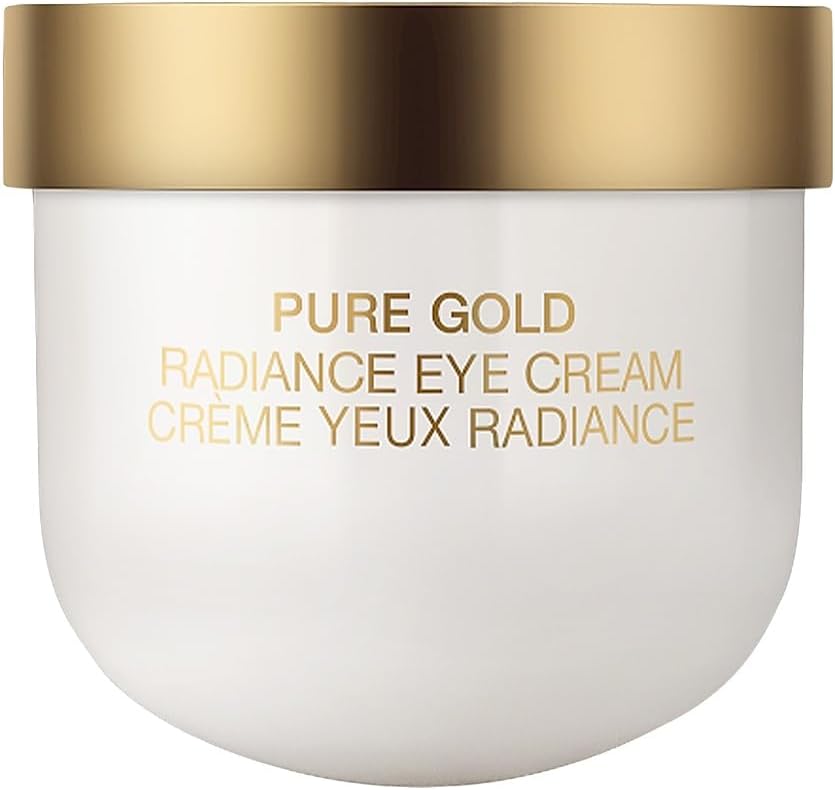
Best for: dryness, plush comfort, and night routines.
- Great if tightness is your main complaint.
- Use less in the morning if you wear concealer.
- Strong buffer behavior for reactive skin.
Affiliate link. Price may change.
Cream Makeup-friendly finish
Chantecaille Nano Gold Energizing Eye Cream

Best for: smoother-looking surface and morning routines.
- Good if you want a refined finish.
- Start with a rice-grain amount per eye.
- Wait before concealer for best wear.
Affiliate link. Price may change.
Set Compare textures
La Prairie Skin Caviar Eye Wonder 4-Piece Set
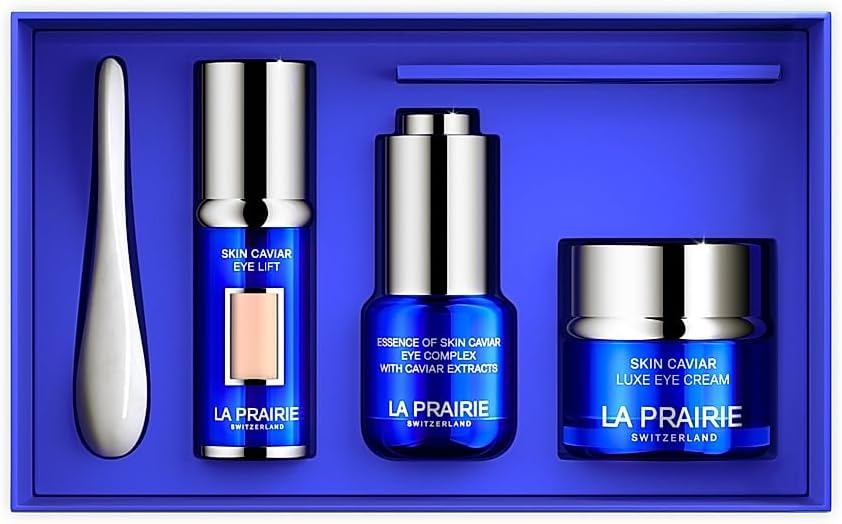
Best for: texture testing and a system-style routine.
- Useful if you want a gel plus a richer layer.
- Great for learning what your skin prefers.
- Pairs well with the press technique.
Affiliate link. Price may change.
One rule helps most people. Choose one hero product first. Add a second layer only if you have a clear reason.
Two routines you can keep
Morning routine (2 to 3 minutes)
- Cleanse or rinse.
- Apply a serum or gel layer if you use one.
- Wait 60 to 90 seconds.
- Add a micro-amount of cream only where you crease.
- Apply sunscreen.
- Press in concealer if you wear it.
If your goal is a more awake look, prioritize a lightweight layer. Then use the press technique. Consistency beats complexity.
Night routine (2 to 4 minutes)
- Cleanse thoroughly.
- Apply serum lightly if you use one.
- Apply cream on the orbital bone.
- Stop before the lash line.
Night is where creams often shine. Air is often drier indoors. Water loss rises while you sleep. So this is the right time for comfort.
Mistakes that make good products look bad
Mistake 1: Using too much product
The under-eye area needs less than you think. Too much increases slip. Slip increases creasing. Start with a rice-grain amount per eye.
Mistake 2: Rubbing instead of pressing
Rubbing creates redness. It also creates heat. Heat can increase eye watering. Pressing avoids most of that.
Mistake 3: Layering without waiting
When you stack products too quickly, they mix on the surface. That mixing can roll into pilling. Pause for one minute. Then continue.
Mistake 4: Expecting topicals to change structure
Topicals can brighten and smooth the surface. Yet they cannot replace volume. Set expectations with kindness. Focus on hydration and finish.
Next reads are publishing soon, so links will appear here once those pages are live.
FAQs
Do I need both a serum and a cream?
Not always. If your mornings include concealer, a serum alone can be enough. If your under-eyes feel dry by midday, add a cream at night. If you use both, keep the cream layer extremely small.
What goes first, serum or cream?
Serum goes first. Cream goes second. This order usually reduces pilling. It also improves comfort.
How much should I use under the eyes?
Start with a rice-grain amount per eye. If you see creasing, use less. If you feel tightness, use a slightly richer layer at night.
Why does my concealer pill after eye products?
Pilling usually comes from too much product or not enough dry time. Base mismatch can also cause rolling. Use less, wait longer, and press concealer instead of swiping.
Can I apply eye product right up to the lash line?
I usually do not. Product migrates with heat and movement. Staying on the orbital bone reduces watering and irritation risk.